
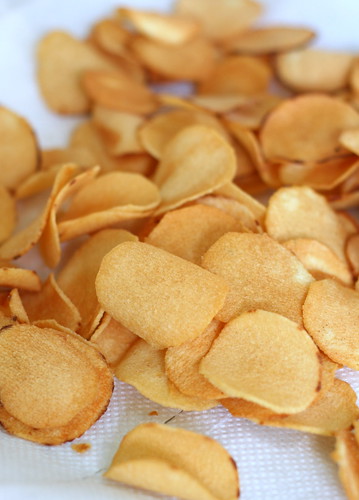
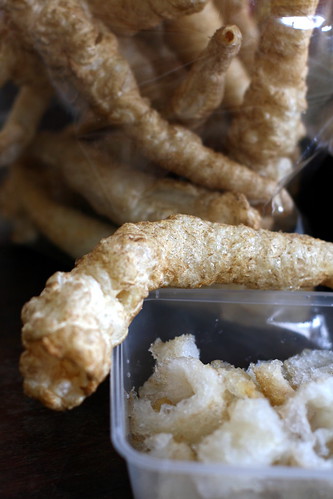
 Ben dropped by the house and quickly zoomed in on these. Before he popped them into his mouth I warned him that these might not be what he expect. I knew he had mistaken them for potato chips. These are arrowroot chips. Meant to post this before CNY but forgotten in the midst of all the festive activities, last minute shopping and cooking.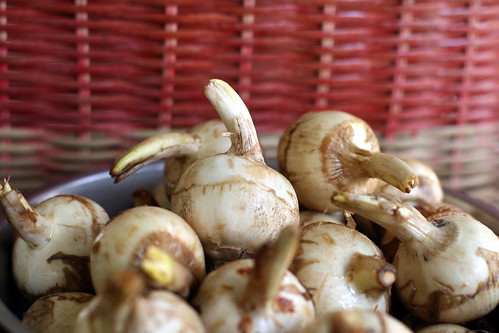
Arrowroots, clad
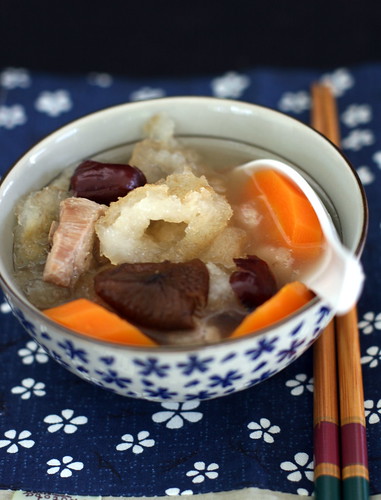
These only come by once a year during CNY. So even when I swear that i won't touch veggies from China, I couldn't resist these. I love them braised with chinese sausage and chicken. The children like them fried as chips (don't think they know what these chips are made of when they pop them into their mouth).
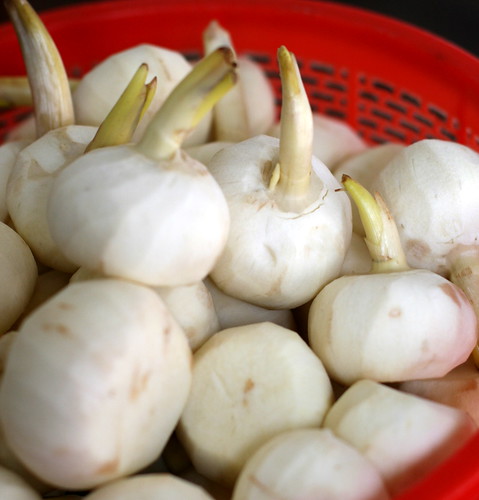
Arrowroots, unclad
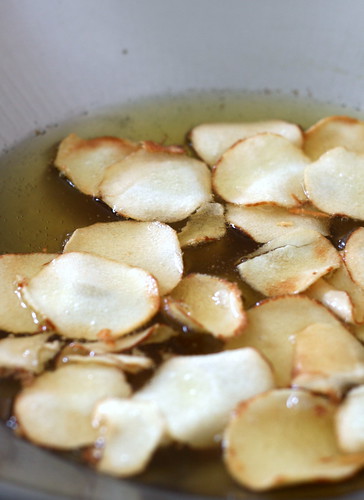 Use a slicer and slice arrowroots directly into hot oil. Rewind---see the previous foto--- have a good reason to leave the tips intact when peeling. I needed something to grab on to when slicing. Do not overcrowd when frying as they will stick together, so just do one arrowroot at one time unless your wok is big and fill with tons of oil. Be ready to lift up the chips fast as they cook and brown very quickly.
 These were the first few batches and as usual, forgotten that they will continue cooking after lifted from oil. Overly brown and they get too bitter (they are a little bitter to begin with). If you like, sprinkle on fine salt but sparingly. When cooled, store in airtight container. Make excellent gift for CNY as they resemble gold coins (I know, I know this is a little too late for this CNY but there is always next year, right?).
 I want to wish everyone a very happy and 'full filling' Chap Goh Mei.




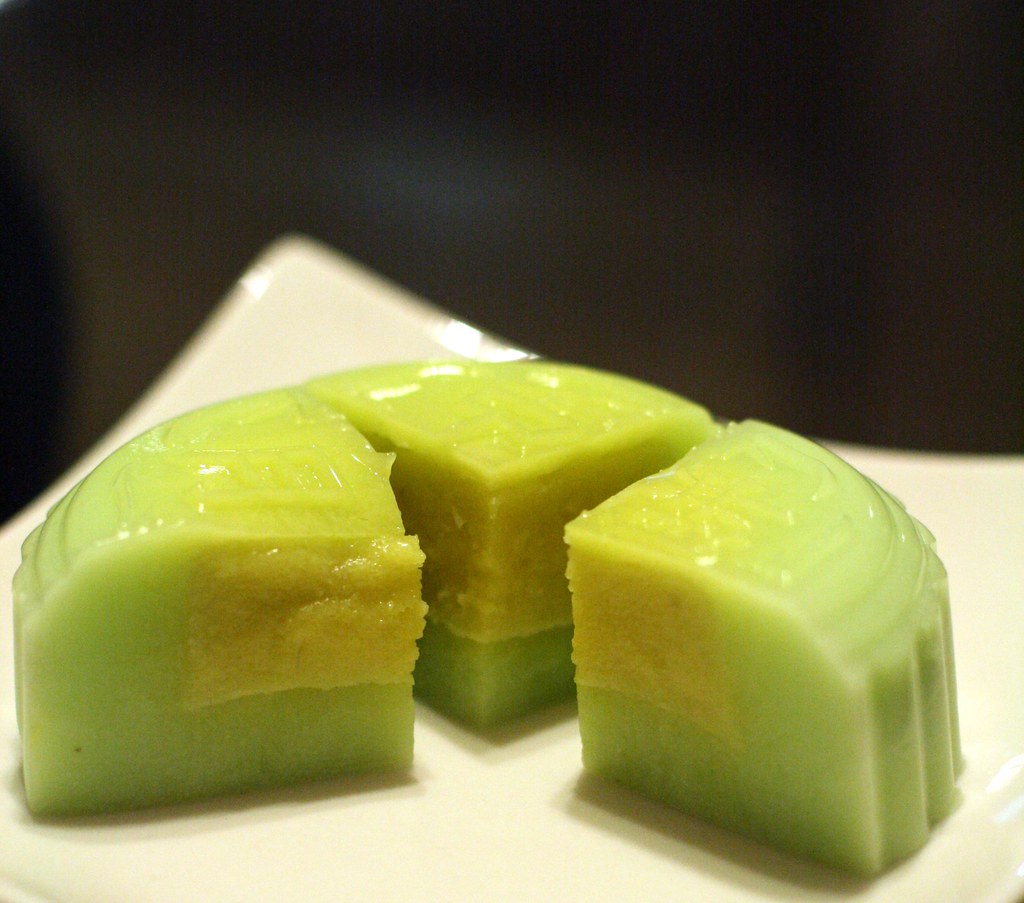


 When Starr sms from Hanoi to wish us a happy Chinese new year, I sms back to wish her the same. I jokingly (was I?) asked for a banh chung, Vietnamese sticky rice cake that is a must during the Vietnamese new year.
 So you can imagine my surprise as I came face to face with this dark green parcel in the fridge when I returned home from the recent trip to China.


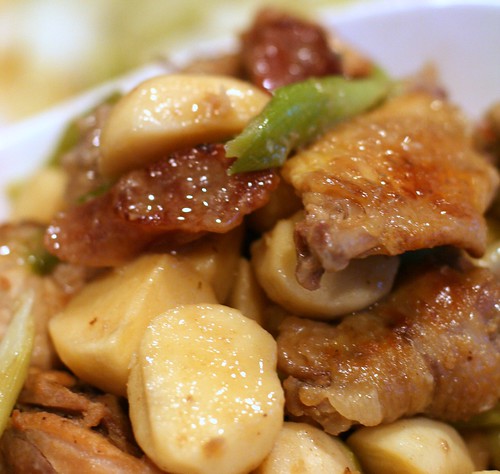
 ~Season chicken pieces with some light soy sauce.
  These are the last of the veggie and will have to wait another year for the next dish/date with these tubers!
 Filling:
 Note: Tang yuan can be filled with tau sau (red bean paste), sesame seed paste or no filling at all. Soup can also be savoury with chicken stock.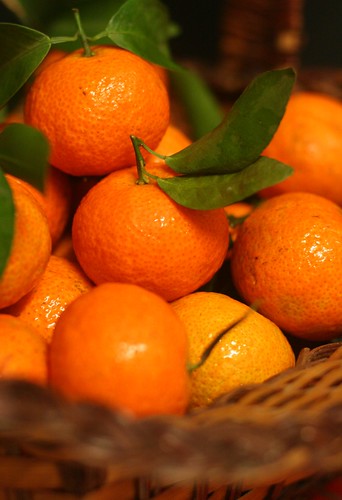
 These were my mum's cny favourite and we always have it during the festival. When young, this, to me was a special candy we could only get during cny and didn't realised it actually was a fruit. It was only much later in my life that I finally got to taste persimmon in its fresh state and by then I was already fiercely loyal to its dried version.
 Dried figs. Not a very traditionally cny fare but I found this rather fresh dried fig recently and fell in love with it. This sundry shop keeper said they only have them during the cny period. Normally, the dried fig we get are very much drier and harder and can only be used in cooking soups but this, when washed, can be eaten as is or serve in salad thinly sliced.
 Another must-have for the coming lunar new year.
 This was not the family favourite until recent years when I started making it into chips. Now they couldn't get enough of arrowroot chips (I deep-fried more than 6 kg of these for the last cny). I still prefer arrowroot stew with chicken, Chinese sausage and leek but not many share my sentiment.
 Jo
Jo
 A must-have whole steamed chicken symbolizing completeness.
 Kai lan with pacific clams, so yummy.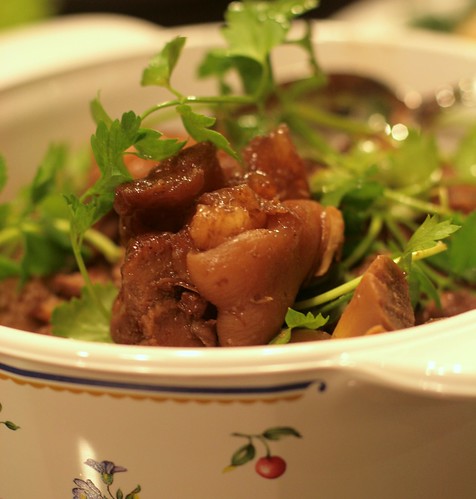
 The most traditional Hakka's stuffed tofu...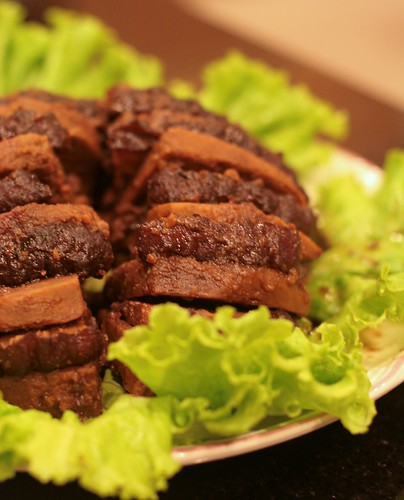
 Tofu in a sweet sauce garnished with bonito flakes, spring onions and fried scallions.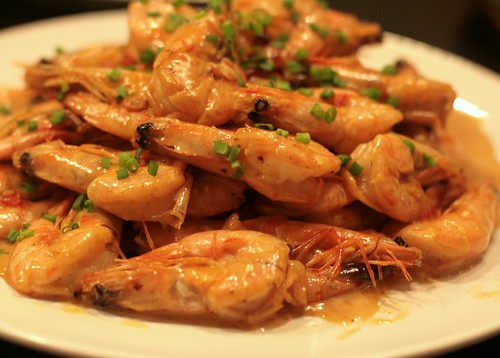
 Egg pockets filled with mince meat.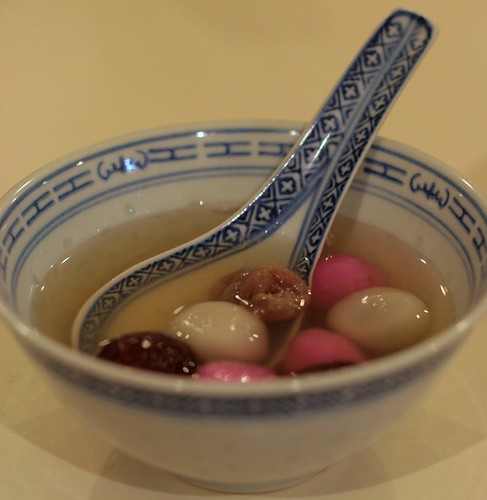


 The light purple moon cake is with yam (taro) paste. It is made of 100% real yam! Can actually see some bits and pieces of the yam in this picture.